 Oct 15, 2026

The worlds of royalty, haute horology, and international auctions occasionally intersect in fascinating ways. One such intersection connects Malaysia’s first Prime Minister, Tunku Abdul Rahman, the prestigious Swiss watchmaker Patek Philippe, and the renowned auction house Bonhams. Through history, craftsmanship, and the preservation of cultural artifacts, these three names form a compelling narrative that highlights how timepieces can transcend mere functionality to become objects of heritage, prestige, and historical significance.
Tunku Abdul Rahman was a pivotal figure in Malaysian history. Born in 1903, he was a prince of the Kedah royal family, hence the title ‘Tunku’. He then became the leader of the political party UMNO before becoming the “Father of Independence” of Malaysia after the country achieved independence from Britain in 1957. His reign marked the beginning of a new era for the Federation of Malaya, and his leadership played a symbolic role in shaping the nation’s identity.
As a member of royalty during the mid-20th century, Tunku Abdul Rahman lived in an era when fine mechanical watches were not only tools for timekeeping but also powerful symbols of prestige and diplomacy. Luxury timepieces were frequently exchanged as gifts among monarchs, diplomats, and political leaders. Such watches often became treasured heirlooms that reflected both personal taste and historical moments.
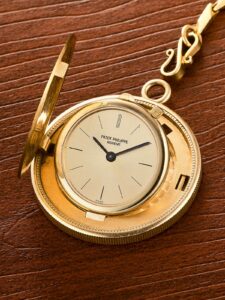
Among the most respected watchmakers during that period was Patek Philippe, a brand long associated with royalty, aristocracy, and collectors of the highest calibre.
Founded in 1839 in Geneva, Patek Philippe has built a reputation as one of the most prestigious watchmakers in the world. Known for its exceptional craftsmanship, complicated movements, and timeless designs, the brand has historically supplied watches to kings, queens, and influential figures.
Many famous royal clients have owned Patek Philippe watches, including European monarchs, Middle Eastern royalty, and Asian rulers. The brand’s motto—“You never actually own a Patek Philippe. You merely look after it for the next generation”—captures the idea that these watches are objects meant to be preserved and passed down through time.
During the mid-20th century, it was common for world leaders and royal families to commission or receive special watches from the brand. These timepieces often featured personalized engravings, coats of arms, or commemorative inscriptions marking important events such as coronations, diplomatic visits, or national celebrations.
It is within this tradition that a watch associated with Tunku Abdul Rahman emerged as an important historical artifact.
When a watch connected to a prominent historical figure appears at auction, it attracts considerable interest from collectors, historians, and horology enthusiasts. Provenance adds significant value to a watch because it transforms the object from a luxury accessory into a piece of living history.
In some cases, watches once owned by monarchs or political leaders have surfaced at auctions, drawing global attention due to their rarity and historical importance.
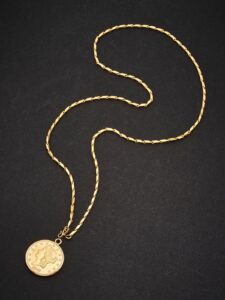
One of the most compelling links between the three entities involves a watch connected to Tunku Abdul Rahman that was produced by Patek Philippe and later handled by Bonhams.
Royal watches are particularly fascinating because they carry both horological and political significance. A watch owned by a monarch is more than just a precision instrument; it becomes a symbol of an era, representing the cultural tastes and historical context of its owner.
In the case of Tunku Abdul Rahman, the watch attributed to him reflected the elegance and prestige associated with royal patrons of Swiss watchmaking. Such watches were typically crafted with exceptional attention to detail, often featuring precious metals such as gold and elegant minimalist designs typical of mid-century Patek Philippe models.
When a watch of this nature appears at auction, collectors are drawn not only to the brand name but also to the story behind the piece. Provenance connected to a national leader or monarch significantly enhances both its cultural value and its desirability among collectors.
The exact Patek Philippe model associated with Tunku Abdul Rahman that appeared at auction is the:
Patek Philippe Reference 803 Coin Watch
This historically significant watch was sold through Bonhams and is considered a rare collector’s piece because of both its unusual design and its royal Malaysian provenance.
Model: Patek Philippe Reference 803 Coin Watch
Year: Circa 1969 (presentation year)
Movement: Manual winding Calibre 99P
Case Size: 35 mm
Material: 18k yellow gold
Unique Feature: Made from an 1895 United States $20 Double Eagle gold coin with a concealed dial.
The watch belongs to Patek Philippe’s rare coin watch series (references 800–809). These watches were created using historic gold coins, which acted as a hinged cover. When the coin face is opened using a discreet latch, the hidden watch dial appears underneath.
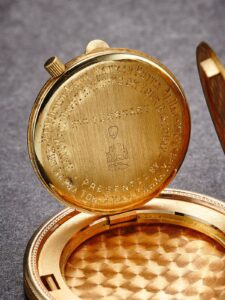
The particular example linked to Tunku Abdul Rahman carries an engraving indicating it was presented to him as a birthday gift on the 8th of February 1969. The watch was reportedly given by the wife of Mustapha Harun (Tun Datuk Toh Puan Rahimah Mustafa), who was the first Governor of Sabah, as a commemorative gift. The watch remained in his possession until 1976, when he gifted it to his granddaughter on her 16th birthday.
This watch later appeared in a major watch auction held by Bonhams in Hong Kong, the buyer remains anonymous.
Auction result:
Sold for HK$217,600 (including premium)
Auction: Echoes of Time: Rare Timepieces from the Pages of History
Date: 25 November 2025
One of the most fascinating aspects of the Patek Philippe Reference 803 Coin Watch is its hidden-dial mechanism, which makes the watch appear at first glance to be nothing more than a gold coin.
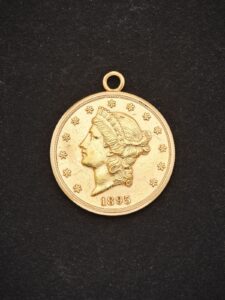
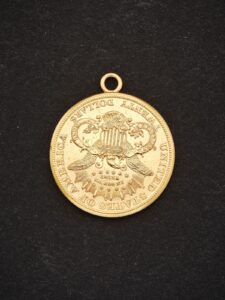
At first sight, the watch looks exactly like a United States $20 Double Eagle gold coin. The front of the coin displays the classic Lady Liberty portrait, while the reverse shows the American bald eagle.
The coin itself forms the outer case of the watch. Patek Philippe craftsmen carefully hollowed out the coin while preserving the original design on both sides. The result is a watch that looks like a normal coin when closed.
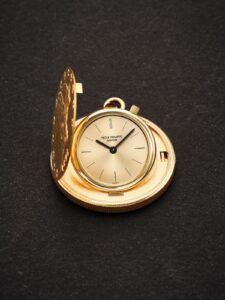
Collectors often describe this as a “secret watch” because no dial is visible until the coin is opened. A small thumbpiece is integrated into the coin’s ridged edge, when pressed the cover springs open revealing a miniature mechanical watch dial. The hinge and button are so well integrated that many do not
realise that the coin is actually a watch.
Over the years Passions has sold a few such gold coin watches signed by Vacheron & Constantin and recently a Piaget made for Cartier. For more interesting and rare watches, please register and subscribe with us for updates. (www.passions.sg)
*All photographs are courtesy of Bonhams HK


